
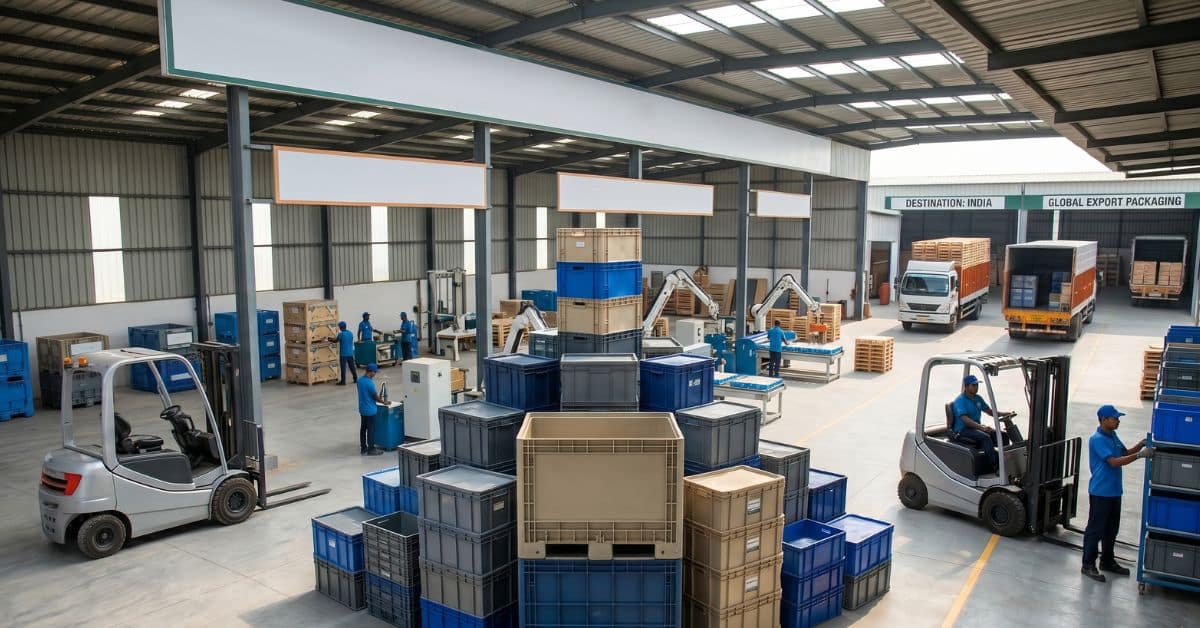
In the modern logistics landscape, businesses are constantly seeking innovative ways to reduce operational costs, minimize waste, and improve supply chain efficiency. One of the most effective strategies to achieve these goals is the implementation of returnable packaging containers (RPCs). Unlike traditional single-use packaging that ends up in landfills after one trip, these robust, reusable systems are designed for multiple lifecycles. At Yantrapacks, we understand that upgrading to a closed-loop packaging system is not just an environmental choice; it is a highly profitable business decision. This comprehensive guide will explore how transitioning to reusable transit packaging can transform your logistics, protect your products, and significantly boost your bottom line.
Why Your Business Must Adopt Returnable Packaging Containers
The shift from single-use cardboard and light plastics to heavy-duty returnable packaging containers is accelerating across global supply chains. But what exactly drives this transition? The answer lies in the intersection of cost reduction, environmental compliance, and superior product protection.
When a company integrates returnable packaging containers into its logistics network, it creates a “closed-loop” system. Products are shipped to their destination, and the empty containers are then collected, cleaned, and returned to the origin point for the next shipment. Over a period of months or years, the initial investment in these containers pays off exponentially compared to constantly repurchasing corrugated boxes and stretch wrap.
The Core Financial and Operational Benefits
Investing in high-quality returnable packaging containers yields several immediate and long-term benefits for B2B operations:
- Massive Cost Reduction Over Time: While the upfront cost is higher than cardboard, the “cost-per-trip” drops dramatically. A single container can be used hundreds of times, eliminating the recurring expense of consumable packaging materials.
- Superior Product Protection: Engineered from high-density materials, these containers resist impacts, moisture, and compression. This drastically reduces the rate of product damage during transit, saving money on returns and replacements.
- Optimized Space Utilization: Most returnable packaging containers are designed to be stackable when full and nestable or collapsible when empty. This optimizes warehouse storage and maximizes truckload efficiency on reverse logistics routes.
- Enhanced Supply Chain Automation: Standardized dimensions make these containers perfect for automated storage and retrieval systems (ASRS), conveyors, and robotic handling, reducing manual labor costs.
- Sustainability and ESG Compliance: By eliminating single-use waste, companies significantly lower their carbon footprint, helping them meet strict environmental regulations and corporate sustainability (ESG) goals.
Core Types of Returnable Packaging Containers
Not all supply chains are the same, and therefore, returnable packaging containers come in various specialized designs to accommodate different types of cargo, from fragile automotive parts to fresh agricultural produce.
1. Handheld Totes and Bins
These are smaller, ergonomic containers designed to be manually lifted by workers. They are heavily used in retail distribution, pharmaceutical logistics, and e-commerce fulfillment centers. They feature secure lids and standardized footprints for easy palletization.
2. Bulk Folding Containers
Ideal for heavy manufacturing, automotive, and appliance industries. These are large, pallet-sized boxes that can hold hundreds of kilograms of parts. Their key feature is that the walls fold down flat when empty, saving up to 80% of space during the return trip.
3. Stack and Nest Containers
These ingenious returnable packaging containers are designed to stack securely on top of one another when loaded with goods. When empty, they can be nested inside each other. This dual-functionality is a game-changer for businesses looking to minimize freight costs on reverse logistics.
4. Custom Dunnage and Protective Inserts
Inside the main container, custom dunnage (dividers, foam inserts, thermoformed trays) holds specific parts firmly in place. This is crucial for transporting sensitive electronic components or easily scratched automotive trims.
Comparing Single-Use vs. Returnable Packaging Containers
To truly understand the value proposition, procurement managers must look at the total cost of ownership. Here is a direct comparison of how returnable packaging containers stack up against traditional single-use options.
| Feature | Single-Use Packaging (Cardboard/Shrink Wrap) | Returnable Packaging Containers (RPCs) |
| Upfront Cost | Very Low | Moderate to High |
| Cost Per Trip | High (must be repurchased every time) | Extremely Low (cost spread over hundreds of trips) |
| Durability & Protection | Low (susceptible to water and crushing) | Very High (impact and weather-resistant) |
| Storage Space (Empty) | Moderate (must be broken down/baled) | Very Low (if collapsible or nestable) |
| Environmental Impact | High waste generation, even if recycled | Minimal waste, fully circular lifecycle |
| Tracking Capability | Difficult, relies on external labels | High (easily integrated with RFID & IoT sensors) |
Implementing a Reverse Logistics Strategy
The success of returnable packaging containers relies entirely on a well-planned reverse logistics network. Simply buying the containers is not enough; you must have a system to get them back.
Steps for a Successful Closed-Loop System
- Analyze the Loop: Reusable packaging works best in controlled, short-to-medium distance loops where deliveries happen regularly between the same facilities (e.g., a parts supplier and an assembly plant).
- Asset Tracking: Because these containers are valuable assets, tracking them is essential. Modern returnable packaging containers are often equipped with barcodes, QR codes, or embedded RFID tags. This allows logistics managers to monitor inventory levels, track location, and prevent loss or theft.
- Cleaning and Maintenance: Establish a protocol for inspecting and sanitizing containers before they re-enter the supply chain, which is particularly vital in the food, beverage, and healthcare sectors.
Key Industries Thriving on Returnable Packaging Containers
The adoption of circular packaging is sector-agnostic, but certain industries have leveraged it to completely transform their operational margins.
- Automotive Manufacturing: The pioneer of reusable packaging. Car manufacturers use custom-engineered returnable packaging containers to move heavy, precise components from Tier 1 suppliers directly to the assembly line without generating any box waste.
- Agriculture and Grocery: Fresh produce, meat, and dairy require high ventilation and strict hygiene. Plastic returnable crates protect fragile fruits from bruising better than cardboard and can be easily washed and sanitized.
- Pharmaceuticals: Maintaining the integrity of medical supplies is critical. Reusable containers offer secure, tamper-evident, and temperature-controlled transit options.
- Retail and E-commerce: Large retailers use returnable totes to move goods from regional distribution centers to local storefronts, speeding up the stocking process and eliminating backroom cardboard clutter.
Why Choose Yantrapacks for Your Returnable Packaging Containers?
Transitioning to a circular packaging economy requires a reliable partner. Yantrapacks is not just a supplier; we are your strategic logistics partner. When you source your returnable packaging containers from us, you gain access to industry-leading expertise.
- Custom Engineering: We analyze your product dimensions, weight, and transit route to recommend or design the exact container specifications you need.
- High-Grade Materials: Our containers are manufactured from premium, impact-resistant polymers and reinforced materials designed to survive the harshest industrial environments.
- Technology Integration: We offer containers ready for IoT and RFID integration, ensuring you never lose track of your packaging assets.
- End-to-End Solutions: From standard nestable totes to heavy-duty folding bulk boxes, Yantrapacks provides a complete portfolio to upgrade your entire supply chain.
Conclusion: Future-Proofing Your Supply Chain
The era of single-use industrial packaging is rapidly coming to an end, driven by rising material costs and stricter environmental regulations. By integrating returnable packaging containers into your operations, you are doing more than just buying a box; you are investing in a sustainable asset that reduces damage, streamlines handling, and delivers continuous ROI trip after trip. Start optimizing your logistics network today by consulting with the experts at Yantrapacks.
Frequently Asked Questions (FAQ)
What exactly are returnable packaging containers?
Returnable packaging containers (often called RPCs) are durable, multi-use logistics boxes, pallets, or bins designed to safely transport goods multiple times within a closed-loop supply chain, replacing single-use cardboard or plastic film.
How many trips can a returnable packaging container make?
Depending on the material quality and the harshness of the transit environment, a high-quality returnable container can easily last anywhere from 50 to over 250 trips, offering years of reliable service before needing to be recycled.
How do I calculate the ROI of switching to returnable containers?
To calculate the ROI, compare your current annual spend on single-use packaging (boxes, tape, stretch wrap, disposal fees, and damage costs) against the upfront cost of the returnable containers, plus the ongoing costs of reverse freight (shipping them back empty) and occasional washing/maintenance. Most businesses see a full ROI within 12 to 18 months.
Are returnable packaging containers hygienic for food and medicine?
Yes. Containers designed for the food and healthcare industries are made from non-porous, food-grade plastics that do not absorb moisture or harbor bacteria. They are specifically designed to withstand high-temperature industrial washing and sanitization processes.
What happens if returnable packaging containers get lost?
Asset loss is a valid concern, which is why modern systems heavily utilize tracking technology. By embedding RFID tags or smart barcodes into the containers, businesses can track the exact location of their assets in real-time, holding specific vendors or facilities accountable for any unreturned containers.
No comment