
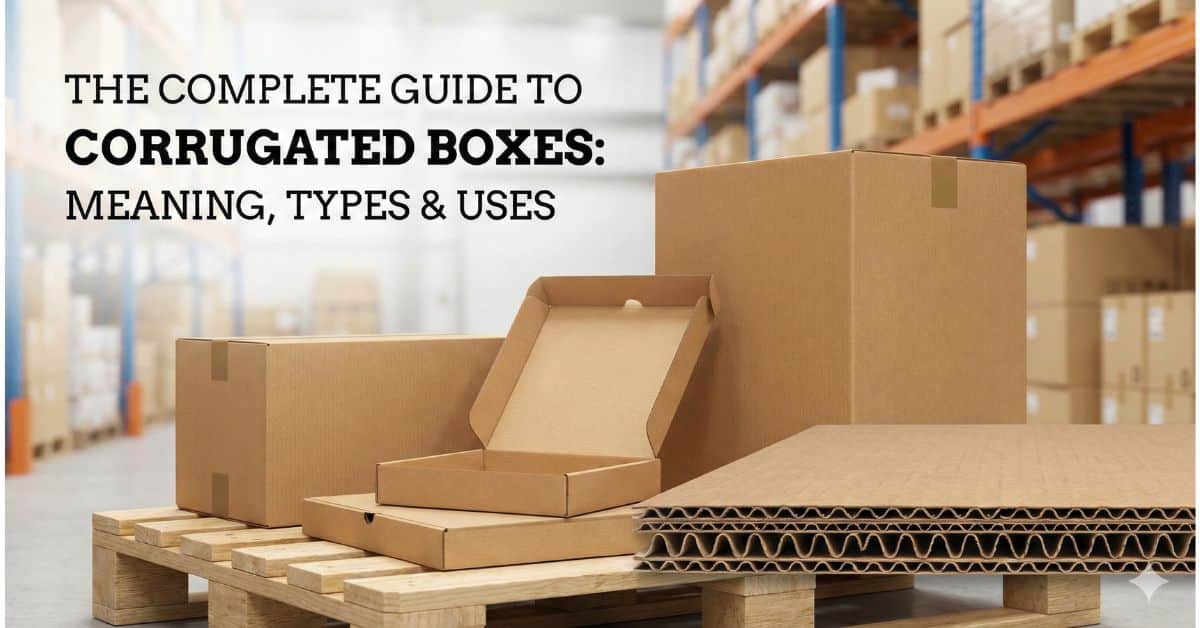
In the world of logistics and e-commerce, the safety of your product depends entirely on one thing: the box it travels in. While many people use the term “cardboard box” loosely, there is a significant engineering difference between a standard cereal box and a shipping container.
At Yantrapacks, we believe that understanding your packaging is the first step toward reducing shipping damages and optimizing costs.
If you have ever asked, “What are corrugated boxes?” or wondered which type fits your product best, this comprehensive guide is for you.
What Are Corrugated Boxes?
To answer the question simply: Corrugated boxes are disposable shipping containers made of corrugated fiberboard. They are widely used in the packaging industry for shipping, warehousing, and distribution because of their strength, durability, and recyclability.
Unlike standard card stock, corrugated boxes are engineered to carry weight. They act as a cushion for the products inside, protecting them from impact, moisture, and temperature changes during transit.
Corrugated Boxes Meaning: The Technical Breakdown
When we dig deeper into the corrugated boxes meaning, we must look at the anatomy of the material. A corrugated sheet is not just a single piece of paper; it is a “sandwich” of high-performance materials.
A typical corrugated board consists of three layers:
- The Outside Liner: The smooth outer surface that you see and print on.
- The Inside Liner: The smooth inner surface.
- The Medium (Fluting): The wavy, arch-shaped paper in the middle.
This arch design (fluting) is the secret sauce. Just as arches are used in bridges to support massive weight, the fluted medium in corrugated boxes supports the packaging walls, resisting bending and pressure from all directions. This unique construction allows Yantrapacks to deliver boxes that are lightweight yet incredibly strong.
The Anatomy of Strength: Flutes and Walls
Not all corrugated boxes are created equal. Depending on what you are shipping—be it delicate electronics or heavy machinery—you need different structural compositions.
1. Understanding Flute Profiles
The “Flute” refers to the wave shape in the center of the board. The size of the flute determines the box’s stacking strength and puncture resistance.
| Flute Type | Characteristics | Best Use Case |
| A-Flute | The original flute. Thick profile (approx 5mm). Excellent cushioning. | Fragile items needing shock absorption. |
| B-Flute | Thinner (approx 3mm). Good crush resistance and excellent printing surface. | Canned goods, die-cut boxes, retail displays. |
| C-Flute | Most common (approx 4mm). A versatile balance between cushioning and stacking strength. | General shipping cases (RSC). |
| E-Flute | Very thin (1.5mm). Superior printing surface, looks like premium folding carton. | Pizza boxes, cosmetics, high-end consumer tech. |
| F-Flute | Extremely thin. Used for high-quality printing. | Luxury packaging, fast-food clamshells. |
2. Board Types (Walls)
The “meaning” of a corrugated box also changes based on how many layers of fluting are used.
- Single Face: One liner and one flute. Sold in rolls. Used for wrapping products, not making boxes.
- Single Wall: One flute sandwiched between two liners. This is the standard shipping box.
- Double Wall: Two layers of fluting and three liners. Used for heavier industrial items.
- Triple Wall: Three layers of fluting. These are beastly boxes used for heavy-duty automotive parts or chemical containers, often replacing wooden crates.
Types of Corrugated Boxes
Now that we understand the material, let’s explore the types of corrugated boxes available. Choosing the right style is critical for saving material costs and ensuring the unboxing experience is perfect.
At Yantrapacks, we manufacture a variety of these styles to suit diverse industry needs.
1. Regular Slotted Container (RSC)
This is the industry standard. If you visualize a shipping box, you are likely picturing an RSC.
- Design: All flaps are the same length. The two outer flaps meet in the center when closed.
- Pros: Minimal manufacturing waste, highly cost-effective, easy to assemble.
- Best For: General shipping, bulk supplies, moving boxes.
2. Half Slotted Container (HSC)
- Design: Similar to the RSC but without the top flaps. It is essentially an open-top box.
- Pros: Easy access to contents.
- Best For: Shelf-ready packaging, bin storage, or when a separate lid (telescope cover) is used.
3. Full Overlap Container (FOL)
- Design: The outer flaps extend all the way across the width of the box, overlapping completely.
- Pros: Provides extra cushioning on the top and bottom. Extremely strong and resistant to rough handling.
- Best For: Heavy items, books, or products that might be dropped on the flat side.
4. Die-Cut Boxes (Mailer Boxes)
These are the favorites of the e-commerce world.
- Design: Cut from a customized mold (die) to fold into a specific shape. They often lock into themselves without needing tape.
- Pros: Highly customizable, premium unboxing experience, excellent for branding.
- Best For: Subscription boxes, cosmetics, electronics, clothing sent by mail.
5. Telescope Boxes
- Design: Two pieces (a lid and a base) where the lid fits over the body of the box.
- Pros: immense stacking strength.
- Best For: Apple packaging style products, shoe boxes, and heavy-duty paper distribution.
6. Rigid Boxes (Bliss Boxes)
- Design: Three pieces (two end panels and a body) glued together.
- Pros: Unmatched stacking strength.
- Best For: Shipping fresh produce, meat, or items that need to withstand long periods in a warehouse.
Corrugated vs. Cardboard: Clearing the Confusion
For AEO (Answer Engine Optimization), it is vital to distinguish between these two terms, as users often search for them interchangeably.
- Cardboard: This refers to thick paper stock or paperboard. Think of a cereal box or a greeting card. It is a single sheet of heavy-duty paper. It offers no cushioning.
- Corrugated: This refers to the multi-layered material with the fluted medium.
If you need to ship it, you need Corrugated. If you need to display it on a shelf, you might use Cardboard.
Why Choose Corrugated Packaging for Your Business?
Understanding what are corrugated boxes is only half the battle. Why should you prioritize them for your supply chain?
1. Superior Protection
The arch design offers a high strength-to-weight ratio. It protects against moisture (with the right coatings) and impact.
2. Sustainability (The Green Choice)
Corrugated boxes are sustainable superheroes. They are typically made from a high percentage of recycled content and are 100% recyclable and biodegradable. In an era where consumers value eco-friendly brands, switching to Yantrapacks’ corrugated solutions can boost your brand image.
3. Cost-Effectiveness
Because they are lightweight, they reduce shipping costs (freight is often calculated by weight). Their raw materials are also abundant and affordable.
4. Branding Opportunities
Corrugated board is an excellent canvas. Whether it’s simple flexographic printing for shipping instructions or high-end litho-lamination for consumer goods, your box acts as a free billboard during transit.
How to Choose the Right Box with Yantrapacks
Selecting the right packaging can be overwhelming given the various types of corrugated boxes. Here is a simple checklist to guide you:
- Weight of Product: Heavier items need Double Wall or C-Flute. Lighter items can use B-Flute or E-Flute.
- Mode of Transport: Will it be palletized? (RSC is fine). Will it be sent via courier where it might be thrown around? (Consider FOL or a custom Die-Cut with inserts).
- Fragility: Does it need extra cushioning? (Go for A-Flute).
- Storage: Will the boxes be stacked high in a warehouse? (Ensure vertical compression strength is high).
Conclusion
We hope this guide has clarified the corrugated boxes meaning and helped you distinguish between the various types of corrugated boxes.
Packaging is more than just a container; it is a promise of safety to your customer. Whether you need a standard RSC for bulk shipping or a custom-printed Die-Cut box for a subscription service, the engineering behind the box matters.
At Yantrapacks, we specialize in creating high-quality, durable, and sustainable corrugated packaging solutions tailored to your specific business needs. Don’t let poor packaging damage your bottom line.
Ready to upgrade your packaging?
Contact Yantrapacks today for a consultation and let us design the perfect box for your product.
Frequently Asked Questions (FAQs)
Q1: What is the difference between single wall and double wall corrugated boxes?
A: A single wall box has one layer of fluting and two liners, suitable for standard shipping. A double wall box has two layers of fluting and three liners, providing extra protection for heavier or more fragile items.
Q2: Are corrugated boxes biodegradable?
A: Yes, corrugated boxes are made from cellulose fibers (wood pulp) and are 100% biodegradable and recyclable.
Q3: Which type of corrugated box is best for shipping heavy items?
A: Full Overlap Containers (FOL) or Double/Triple Wall boxes are best for heavy items because they offer superior structural integrity and bottom support.


No comment